
Plan and allocate
Translate a production requirement into a work order, reserve materials and identify shortages before work starts.
Production software connecting materials, work orders, shop-floor activity, quality checks and finished-goods dispatch.
Discuss your project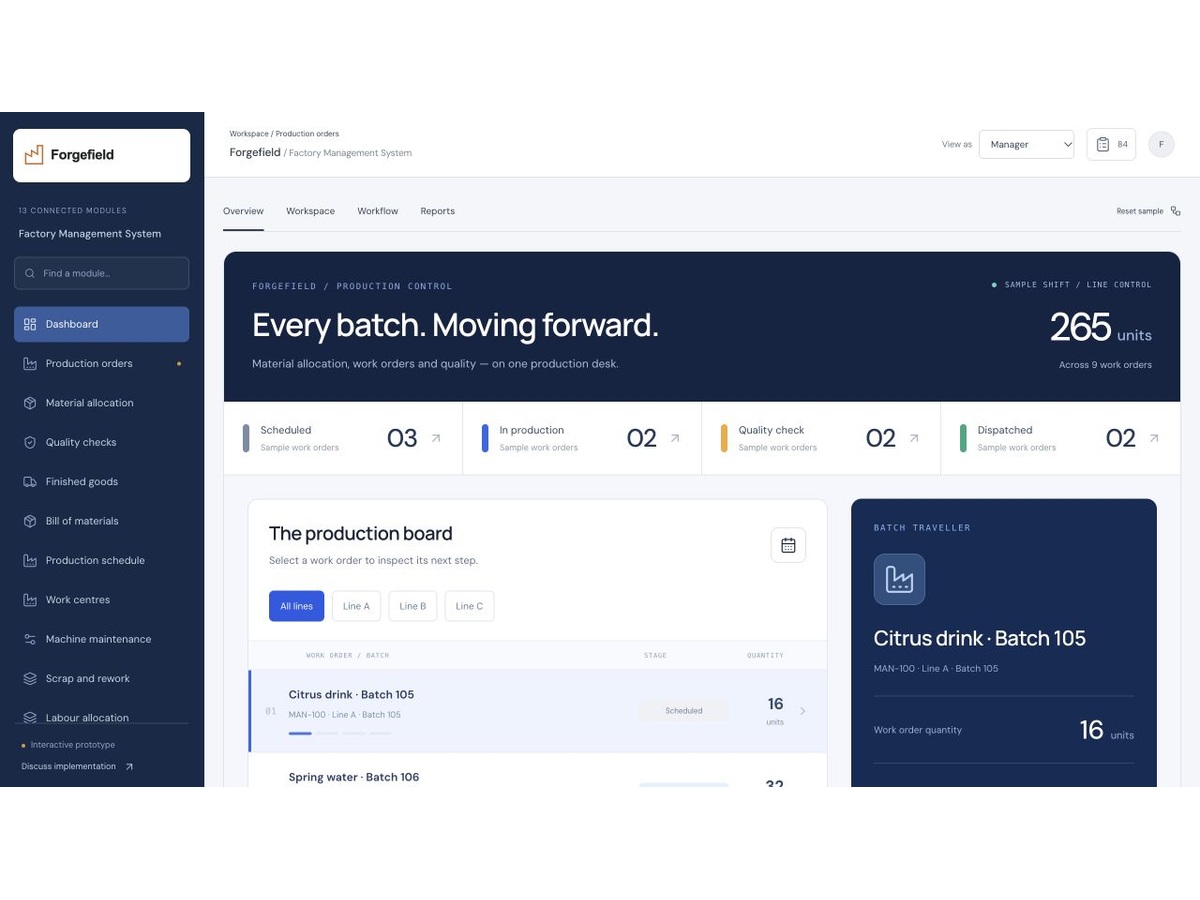
Production software connecting materials, work orders, shop-floor activity, quality checks and finished-goods dispatch.
Manufacturing needs a connected view of what is planned, what is actually running and what is ready to ship. We model bills of materials, work centres, routing and stock movements so a work order can be followed from input to output.
The first implementation should prove a real operating cycle on a manageable line or product family. Operators review the shop-floor screens, quality teams define release checks and managers confirm which exceptions need attention. Machine connectivity and offline capture are separate scope decisions, not assumptions hidden inside a dashboard.
Translate a production requirement into a work order, reserve materials and identify shortages before work starts.
Capture output, downtime, quality checks and rework against the relevant order or batch.
Move accepted output into finished stock and retain the handover record for fulfilment and reporting.
Translate demand into work orders, routing, material requirements and a workable schedule.
Record job progress, labour, output, downtime and the reason a production stage is blocked.
Connect inspections, holds, rework and batch records to the work that produced them.
Coordinate machine servicing, finished-goods release and the handover to fulfilment.
We agree the deliverables and acceptance criteria before development, then review progress together.
Confirm the people, processes and constraints that shape the work.
Review a concrete plan or prototype before implementation.
Inspect working increments and resolve feedback with your team.
Complete the agreed checks, documentation and handover.
Explore relevant demonstrations and project showcases. Sample records and demo brands are illustrative; your implementation is scoped around your own operation.
Bring your current workflow, the tools you use and the decisions your team needs to make. We will help turn that into a practical scope.
We assess your production model, routing, product structure, batch or serial tracking and quality process during discovery. Discrete assembly, batch production and mixed operations need different details.
Supported device and machine connections can be scoped after reviewing protocols, network access and operating conditions. The software does not assume every machine exposes usable data.
Yes. A pilot line or product family is a practical way to validate work orders, material use, quality release and operator training before a broader rollout.
We work remotely with teams across countries, states and cities. We agree working-hour overlap, language, hosting, third-party access and market-specific requirements during discovery. Include the locations and time zones your users work in when you share the brief.
Start with the people using the system, the workflow you want to improve and the tools that need to connect. We prepare an estimate against an agreed scope and acceptance criteria. Project size, data migration, integrations and support needs affect the cost and schedule.
We coordinate remote delivery with clear review windows, named owners and practical handover documentation. Language, currency presentation, hosting and the tools your users already rely on are scoped around the project.
Plan your next release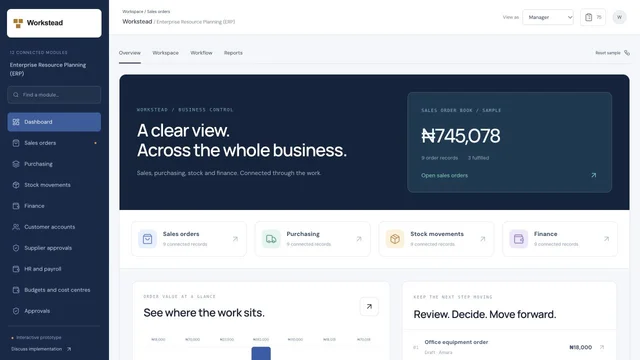 Interactive demo
Connects finance, inventory, HR, sales, procurement and operations in one system.
 Interactive demo
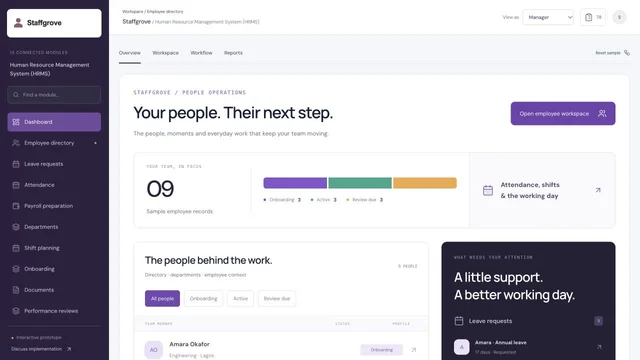
Manages employee records, recruitment, attendance, leave and HR operations.
 Interactive demo
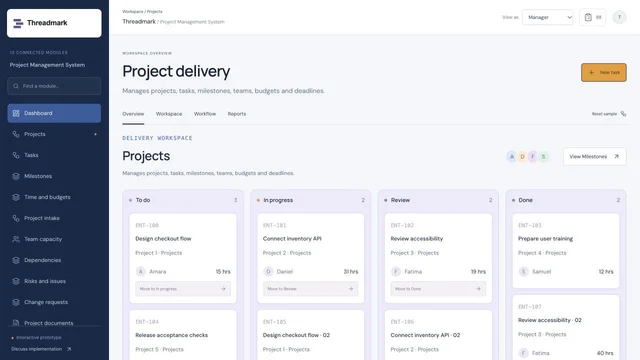
Manages projects, tasks, milestones, teams, budgets and deadlines.
Tell us what you have in mind. We’ll help you find the right way forward.
Let’s talk about your project